 Table Before Trail
Truckee Coffee Beans: What to Buy for a Rental Brewer
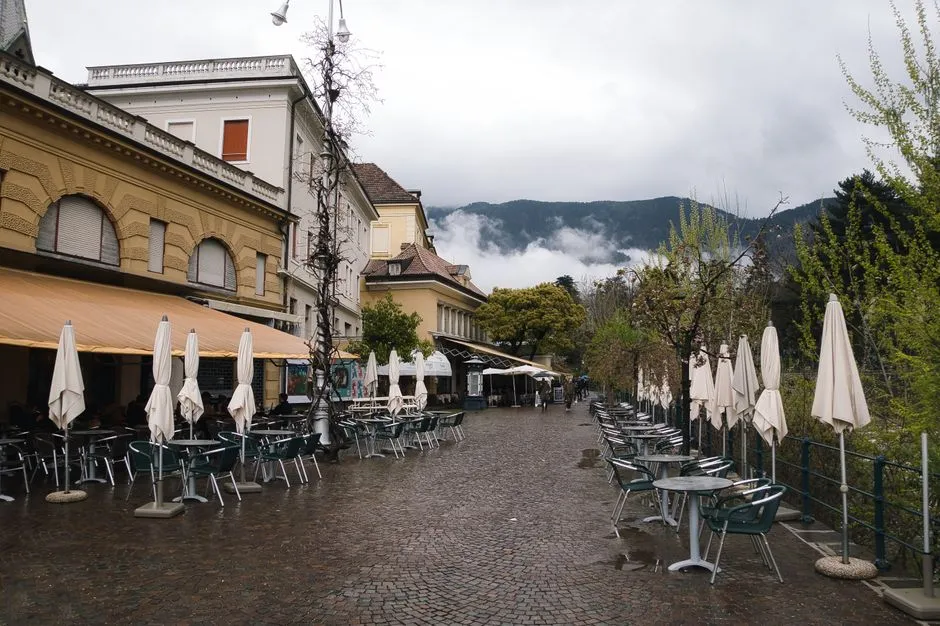
- What should you check before buying coffee beans in Truckee?
- Which brewer does the rental actually have?
- What about pod and capsule machines?
- Is there a grinder, and does it change what you buy?
- Should you buy a bag or order a drink?
- How much coffee does a weekend use?
- Does Truckee's elevation change the brew?
- What safety points apply in a rental kitchen?
- How should beans be stored during the stay?
- What should you ask before you pay?
- Sources
What should you check before buying coffee beans in Truckee?
Check the rental's brewer first, then whether a grinder is present, then how many cups the stay needs. A drip machine, a French press, a pod machine and an espresso machine each take a different product, and a bag of whole beans is useless without a grinder. If the rental has no grinder, buy ground coffee or ask the seller to grind the bag for your named brewer. If the brewer is unknown or unsuitable, order drinks instead.
Which beans taste best is the reader's decision. This guide covers fit, quantity and storage, not flavour.
Which brewer does the rental actually have?
"Coffee maker" in a listing is not a specification. Ask the host for the make and model, or a photograph that shows the brewer and the filter basket. The answer decides what to buy.
| Brewer in the rental | What to buy | Starting grind (NCA) |
|---|---|---|
| Automatic drip machine | Ground coffee or beans, plus the correct paper filters | Medium, "like kosher salt" |
| Pour-over cone | Ground coffee or beans, plus filters sized for that cone | Medium |
| French press | Ground coffee or beans; no paper filter needed | Coarse, "like rock salt" |
| Espresso machine | Ground coffee or beans for espresso | Fine, "like table salt" |
| Pod or capsule machine | Pods for that exact system | Not applicable |
The grind sizes are the starting points published by the National Coffee Association (NCA) on its drip, pour-over, French press and espresso pages. Each page says to start there and adjust.
Filters are a separate purchase. The NCA's drip page distinguishes flat-bottom baskets from cone baskets, and its pour-over page advises that whatever filter you use, "be sure it's the right size for your pour-over brewer." Confirm the basket shape and size before buying a pack.
What about pod and capsule machines?
A capsule machine takes its own system's capsules. Nespresso runs two lines, Original and Vertuo, and its system comparison page states that "Vertuo machines are exclusively compatible with Vertuo Nespresso pods only." Read the model name on the machine before buying a box.
Some pod brewers accept a reusable filter for ground coffee. Unless the host confirms one is in the rental, beans are no use to a pod machine.
Is there a grinder, and does it change what you buy?
Whole beans need a grinder. Ask whether the rental has one, and what type.
The NCA's storage guidance recommends grinding the amount needed immediately before brewing. That only works with a grinder on site.
No grinder means three workable options:
- Buy a bag already ground for your brewer type.
- Ask the seller to grind a whole-bean bag, naming the brewer rather than a grind setting.
- Order drinks and leave the rental's brewer alone.
The NCA's storage table gives ground coffee 1–2 weeks at room temperature against 1–3 weeks for roasted beans. For a short stay, that difference rarely matters.
Should you buy a bag or order a drink?
| Question | Buy a bag | Order a drink |
|---|---|---|
| Equipment needed at the rental | Compatible brewer, filters, often a kettle | None |
| Grinder needed | Yes for whole beans; no for pre-ground | No |
| Fits an early start before shops open | Yes | Only if a café is open at that hour |
| Espresso-based drinks | Only with an espresso machine | Yes |
A bag suits a group drinking several cups each morning, or an early start. Drinks suit a short stay, an unsuitable brewer, or anyone who wants espresso: the NCA's espresso page lists an espresso machine as required equipment, because espresso uses high pressure.
Opening hours, bag sizes and grinding services change. Confirm with the seller on the day. For how coffee fits the rest of a weekend's meals, see the Truckee food weekend plan.
How much coffee does a weekend use?
Work it out by weight. The NCA's pour-over page gives a ratio of "1 gram of coffee to 13-16 grams of water (1:13 to 1:16)." One gram of water is approximately one millilitre.
Worked example, using that range:
- One 300 g mug of water (about 10 US fluid ounces) needs 18.75 g of coffee at 1:16, or 23.08 g at 1:13.
- Two people, two mugs each, three mornings: 12 mugs.
- 12 mugs need 225 g of coffee at 1:16, or 277 g at 1:13.
- A 12-ounce bag holds 340 g, which covers either figure.
For a drip machine, the NCA's drip page gives the volume version: "1 to 2 tablespoons of ground coffee for every 6 ounces of water." Measure the water in ounces; carafe cup markings may not match your mug.
Does Truckee's elevation change the brew?
Slightly, and mostly in your favour. Truckee sits around 6,000 feet. The Colorado State University Extension high-elevation guide lists water boiling at 203 °F at 5,000 feet and 198 °F at 7,500 feet. Converted, that is 95.0 °C and 92.2 °C.
The NCA's French press and pour-over pages give a brewing temperature of 93 ± 3 °C, which is 90–96 °C, or 194–204.8 °F. Both boiling points fall inside that range, so water just off the boil here is already within the NCA's stated brewing temperature.
The same lower boiling point affects baking far more than coffee; the altitude baking guide covers that.
What safety points apply in a rental kitchen?
Brewing involves water close to boiling. Use the brewer as its manual describes; if the manual is missing, ask the host before using it. Keep the kettle, carafe and French press away from the counter edge and away from children. The NCA's French press page states it directly: "Be mindful of how hot liquids and equipment may get during the brewing process."
Milk and cream are perishable. The FDA's safe food handling page says to keep the refrigerator "consistently 40° F or below" and to refrigerate perishables "within 2 hours of cooking or purchasing," or "within 1 hour if the temperature outside is above 90° F." Confirm the rental fridge works before buying milk. For coffee carried to a trailhead or beach, the picnic food safety plan covers keeping dairy cold.
How should beans be stored during the stay?
The NCA's storage page gives three instructions that apply directly to a rental:
- Use an airtight container. The NCA advises taking coffee out of its retail packaging; do so if the rental has a suitable container.
- Use an opaque container, because "clear canisters let in light."
- Keep it somewhere dark and cool. The NCA names cabinets near the oven or dishwasher as places to avoid.
For a weekend, freezing is unnecessary. The same page notes that coffee absorbs moisture and odours from the air around it, so keep an open bag away from onions and spices.
What should you ask before you pay?
Ask the host:
- What is the make and model of the coffee maker?
- Which filters does it take, and are any supplied?
- Is there a grinder, a kettle and a working refrigerator?
Ask the seller:
- Is this bag whole bean or ground?
- Will you grind it for the brewer the rental has, named by type (drip, pour-over, French press)? If not, choose a pre-ground bag.
- What is the net weight of the bag?
Check the weight against the worked example. Roast and origin are a matter of taste.
Sources
- National Coffee Association: Drip coffee
- National Coffee Association: Pour-over coffee
- National Coffee Association: French press coffee
- National Coffee Association: Espresso
- National Coffee Association: Storage and shelf life
- Nespresso: Choose your Nespresso system
- Colorado State University Extension: High-elevation food preparation guide
- U.S. Food and Drug Administration: Safe food handling
Frequently asked questions
What coffee works in a rental drip coffee maker?
Ground coffee or whole beans you can grind on site, plus paper filters that match the machine's basket. The National Coffee Association suggests starting drip coffee at a medium grind, which it compares to kosher salt, and adjusting from there. Its drip page notes that flat-bottom and cone baskets differ, so confirm the basket shape and size with the host before buying a pack of filters.
How much coffee should I buy for a weekend in Truckee?
Work it out by weight. At the National Coffee Association's pour-over ratio of 1:13 to 1:16, a 300 g mug of water needs 18.75 to 23.08 g of coffee. Two people drinking two mugs each for three mornings need 225 to 277 g in total, so a 12-ounce bag, about 340 g, covers that range with some left over.
Can I use whole beans if the rental has no grinder?
Not directly. Whole beans must be ground before brewing, and a rental may not have a grinder. Either buy a bag already ground for your brewer type, or ask the seller whether they will grind a whole-bean bag, naming the brewer rather than guessing a setting. The National Coffee Association gives ground coffee 1 to 2 weeks at room temperature, which is ample for a weekend.
Does Truckee's elevation change how coffee brews?
Slightly. Truckee sits around 6,000 feet. Colorado State University Extension lists water boiling at 203 °F at 5,000 feet and 198 °F at 7,500 feet, which is 95.0 °C and 92.2 °C. The National Coffee Association gives a brewing temperature of 93 ± 3 °C for French press and pour-over, so water just off the boil here already falls within that range. It is still near-boiling and scalds.